
I’m even more excited to be writing this blog post than I normally am, because I get to write about one of my favorite cities in the world, Budapest! I was lucky enough to call Budapest home for five months while I was in college, and it was there that my love for traveling really blossomed. While I was there, my roommate and I joked that we’d go back in 10 years for our “reunion” (thinking of course that 10 years is a ridiculously long time, and of course we’ll be back sooner!). We were wrong about making it back sooner, but we were overjoyed to make our ten year “reunion” happen.
I hope you enjoy this blog with some new favorites, and lots of nostalgia!

Getting to Budapest & Getting Around
Getting to Budapest is quite easy, no matter where you’re coming from. As a major European city, it has an international airport you can fly to from most anywhere (perhaps just with a layover required). Additionally, Budapest is well connected on the train system – it has two main stations – Keleti and Kelenfold – that are connected to most major European cities.
- If arriving to the airport, the best option is to grab the 100E bus, which takes you directly from the airport to three stops (Kálvin tér, Astoria, and Deák Ferenc tér), all of which are centrally located. When you arrive at the airport, there are QR codes in baggage claim and at the bus stop to help you purchase your ticket. Tickets are 2,500 HUF (~$8 USD).
If arriving to the Keleti or Kelenfold train stations, you’ll be well connected to Budapest’s Metro system. Budapest has a well developed public transportation system, with a Metro system, bus system, and tram system that covers the city very effectively. Google Maps effectively and accurately maps out what lines / options you have when inputting your route, otherwise downloading the Budapest GO app will also work.
- To ride the Metro, you’re able to purchase tickets at the station, on your phone through the Budapest GO app, or also to tap your credit card at the terminal as you’re entering.
- If you’re taking a tram, there likely won’t be a terminal to purchase a ticket, so you’ll either need to have a full-day pass, purchase a ticket on the Budapest GO app, or have already purchased a single-use ticket to use when you were at a metro station.
- Whether it’s worth it to get a day or multi-day pass is truly up to your preferred way of getting around. If you’re staying centrally located and like to walk (as I do), paying for each ticket individually might make more sense.
- A single ticket costs 500 HUF and a 24-hour pass is 2,750 HUF.
- Reminder to validate your tickets as soon as you get on board.
If you’re looking to take a rideshare or taxi, I’d recommend downloading both Uber and Bolt. Both apps call licensed taxis and are regulated. Personally we found Bolt quicker to accept a ride, but both are safe and used commonly in the city.
Budapest’s History and Layout
One of my favorite facts about Budapest is that it actually used to be two separate cities – Buda and Pest, split from each other by the Danube. The cities weren’t connected until the Széchenyi Bridge was built in 1849, and then formally combined into Budapest in 1873.

- The Buda side of the city is on the West side of the Danube. It’s much hillier and historically was home to the cities wealthier residents.
- Pest is the much flatter part of the city, on the east side of the Danube. Home to the city’s Jewish Quarter, Parliament, and more of the the “traditional city center”.
- A core feature of the city is its beautiful and all unique bridges connecting the two sides. There are technically eight road bridges and two railway bridges within the city, but the four most common / accessible bridges (going South to North) are below:
- Liberty Bridge
- Elisabeth Bridge
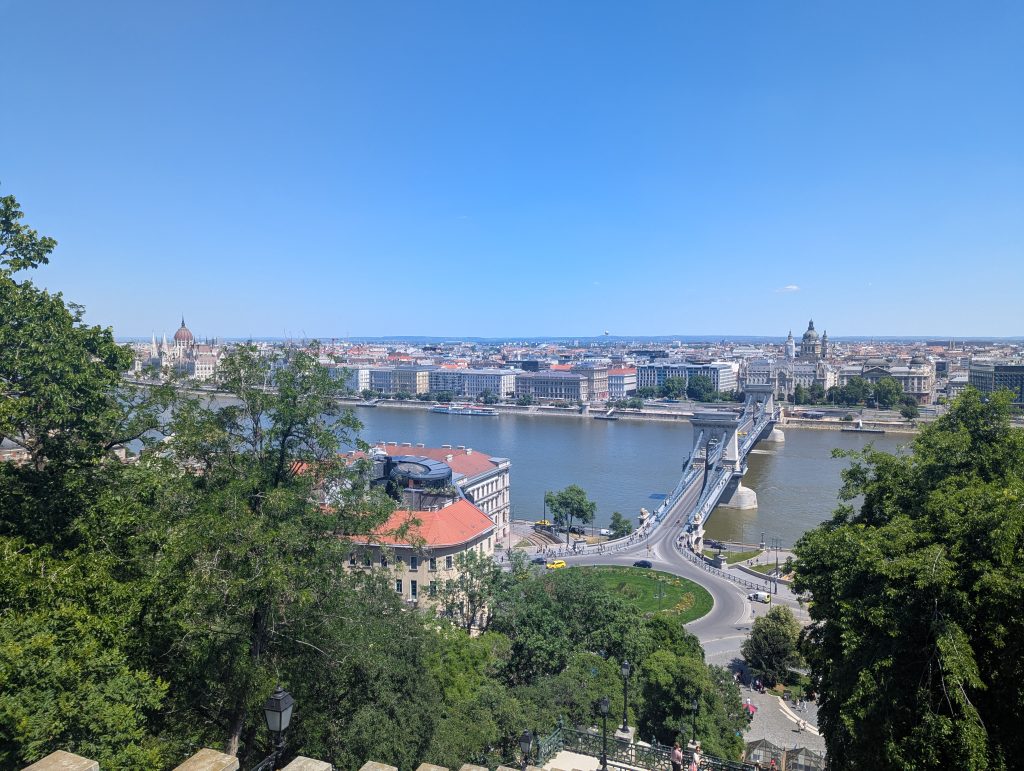
- Széchenyi Chain Bridge (the most famous)
- Margaret Bridge
- Top tip: This is my favorite view of the city. From the middle of the bridge, you can see all of the key sights of Budapest, perfectly lined up!
Where to Stay In Budapest
- To be centrally located, look for places near St. Stephen’s Basilica, Deák Ferenc tér, or the Elisabeth and Széchenyi bridges. Those will put you in walking distance of many key sites as well as lots of restaurants and bars.
- If you’re younger and more focused on nightlife and interesting food locations, consider staying in the Jewish Quarter. This is where you’ll find many of the best hostels in the city.
- Special shoutout to Wombats, my personal favorite!
- If you’re looking for a beautiful, quieter area with good food, consider staying a further North on the Pest side (slightly North of Parliament).
- Just know it may be a further walk from other locations on your itinerary
Friendly sustainable travel reminder: many large cities, especially in Europe, suffer from over tourism (specifically Airbnbs) contributing to affordable housing challenges. If you’re a smaller group and able to afford it, consider staying at a locally owned hotel where tourism permits are more controlled.
What To Do in Budapest
Budapest has something for everyone: history, castles, churches, outdoor spaces, food, and more! Below are some of the most popular (and my favorite) ways to get to know the city and everything it has to offer.
The Castle District
On the Buda side of the city you’ll find Castle Hill, an area packed with some of Budapest’s most popular and pictured sights: Buda Castle, Matthias Church, and Fisherman’s Bastion.
- Buda Castle (also known as the Royal Palace)
- While originally the home of Hungarian Kings and reconstructed by the Habsburgs during the Austro-Hungarian empire, the Castle was heavily damaged by bombing during World War II. Today the Castle houses the National Art Gallery and the Budapest History Museum.
- Personally, I think the main attraction is the exterior (and the view of the city), rather than paying to enter the museums inside the Castle.
- While originally the home of Hungarian Kings and reconstructed by the Habsburgs during the Austro-Hungarian empire, the Castle was heavily damaged by bombing during World War II. Today the Castle houses the National Art Gallery and the Budapest History Museum.
- Matthias Church (technically named the Church of Our Lady of Buda Castle)
- Known best for its multi-colored tile roof, the church is gorgeous inside and out!
- You do have to pay to enter the church ($10-15), and also have the option to pay a separate fee to climb the tower (~300 steps) for a full panoramic view of the city
- Fisherman’s Bastion
- While one of the most famous photos of Budapest you’ll see, Fisherman’s Bastion is really just a viewing terrace. Don’t get me wrong, the views are incredible, and this is a must see! But you’ll likely spend most of your time waiting for a spot to take a picture (unless you are there very early or late in the day).
- You can pay for a ticket to the top terrace, but you don’t see anything there that you won’t get for free below.
- While one of the most famous photos of Budapest you’ll see, Fisherman’s Bastion is really just a viewing terrace. Don’t get me wrong, the views are incredible, and this is a must see! But you’ll likely spend most of your time waiting for a spot to take a picture (unless you are there very early or late in the day).
- Getting There
- One of the easiest (and most picturesque) ways to get to Castle Hill is to take the Funicular. It’s located right next to the Széchenyi bridge on the Buda side, and though it often has a long line to buy a ticket, the line moves quickly.
- I’d recommend just buying a one-way ticket (4,500 HUF) and opting to walk down.
- Bus 16 and 116 will also take you to the top of Castle Hill.
- Finally, there are scenic paths and roads that will take you up (just a reminder that because it’s on a hill, the walk up will likely be steep).
- One of the easiest (and most picturesque) ways to get to Castle Hill is to take the Funicular. It’s located right next to the Széchenyi bridge on the Buda side, and though it often has a long line to buy a ticket, the line moves quickly.

Hungarian Baths
One of the most unique experiences in Budapest is visiting their thermal baths. There’s a collection of facilities across the city where you have the opportunity to soak in medicinal waters from the cities mineral hot springs. There’s one or two baths that are most famous and common for tourists, but all offer a great experience!

- Széchenyi Baths: The most famous location (and most picturesque).
- If you go to only one bath in Budapest, I recommend going here! The complex has both indoor and outdoor pools, at a range of temperatures – it’s by far the largest thermal bath complex in Budapest.
- The baths here are great in both winter and summer thanks to the naturally heated thermal waters and are open for most of the day (morning, afternoon, and night baths all offer a slightly different but wonderful vibe).
- Plan to spend a minimum of two hours here, with up to a half day to fully relax.
- Széchenyi feels more like a unique public pool (with fewer children running around) than a relaxing “spa” experience, but is great nonetheless!
- Tickets can be purchased on site and will be cheaper on the week days or if you enter before 9am.
- Gellert Baths: Located in the famous Gellert Hotel, the second most “classic” bath experience in Budapest.
- Beautiful mosaics cover the facility, and overall the experience feels much less “touristy”. The facility is gorgeous, but much smaller than Széchenyi.
- The majority of the pools here are indoors, but there is a lovely outdoor pool as well.
- Unfortunately, the baths and hotel are closed for a massive renovation, re-opening in 2028.
- Rudas Baths: Slightly more on the luxury side, with a beautiful rooftop pool that offers a panoramic view of the city.
- Located on the Buda side, right along the Danube, Rudas has a collection of indoor thermal pools, an indoor swimming pool, and it’s panoramic rooftop pool (the true gem!).
- Consider buying tickets ahead of time for Rudas.
- Lukacs Baths: The most traditional, local bath of this group.
- The facility is located further north on the Buda side, right near the Margaret bridge.
- Similar to the other facilities, Lukacs has a combination of indoor and outdoor pools, thermal and swimming, as well as a more extensive sauna / wellness section.
- What to Bring
- When visiting the baths, it depends a bit on location, but I’d recommend bringing your own towel since many facilities do not provide or rent them, as well as a pair of flips flops or sandals that you can wear from pool to pool.
- Of course remember your swimsuit as well! (These aren’t ~those~ kinds of baths).
- Overall, which thermal bath should you visit?
- Széchenyi: First-time visitors
- Gellért: Architecture
- Rudas: Rooftop views
- Lukács: Local experience
Gellert Hill
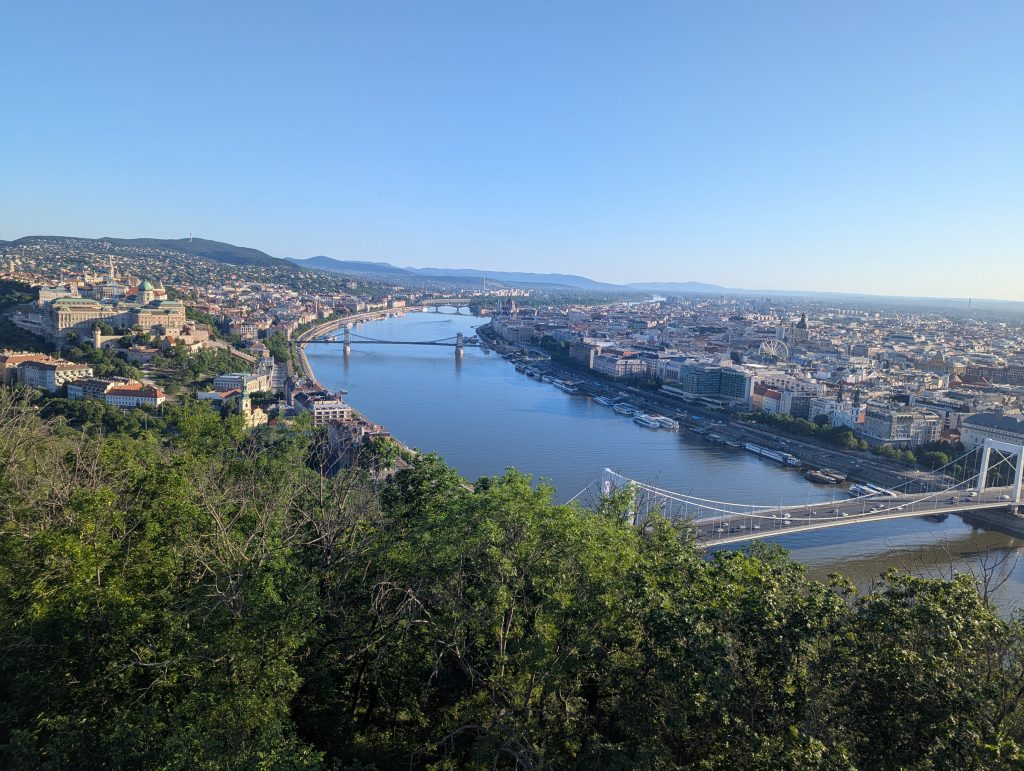
A beautiful viewpoint of the city. It’s about a 30-minute walk (uphill) to the top, where you’ll find the Citadel, Liberty Statue, and a gorgeous view of the city. You can start from either side of the base – near Gellert Hotel or by the Rudas Baths. The path is paved the whole way up and follows a series of switchbacks up the hill. (There isn’t one “right” path, just make sure you’re continuing to go up!). It’s great choice of location to watch the sunrise or sunset, but it’s gorgeous any time of day.
St. Stephens Basilica
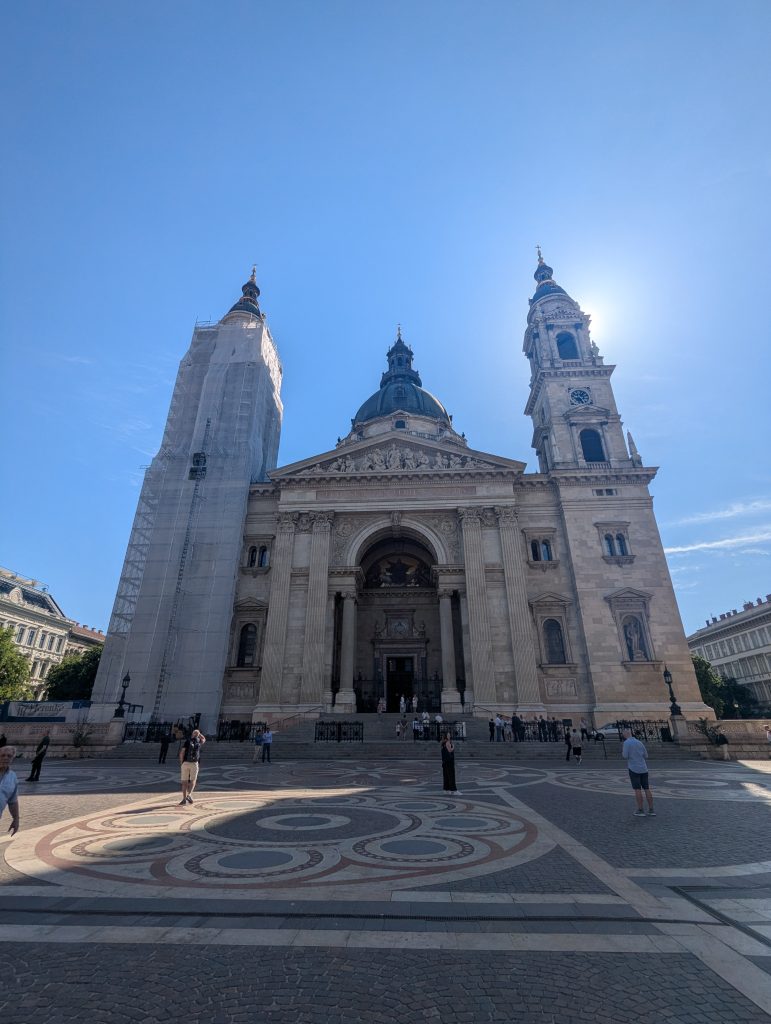
Roman Catholic Basilica in the heart of Budapest, named in honor of St. Stephen (the first king of Hungary). I highly recommend going inside (there is a small fee) as well as paying extra to visit the panoramic terrace of the Dome.

The Danube & The Bridges
While this feels quite obvious, it has to be said – one of the most beautiful features of the city is the Danube cutting straight through it. Even with all the wonderful attractions, my absolute favorite thing to do in the city is to grab some food or a few drinks and sit on the steps or picnic tables along the river. You can spend a great afternoon or dusk walking along the river path on both the Buda and Pest sides and meandering across each of the bridges.
- Danube Boat Cruise: A great way to see the city is by doing a boat tour – depending on the type of experience you want, there are a couple main structures / options. Most of the tours within each format are identical, so choose whatever works best for you. The city is gorgeous lit up at night, so I’d recommend taking one of the tours at or after sunset.
- A ~one hour long tour that offers one welcome drink on board
- A ~one hour long tour with unlimited prosecco (a great option if your priority is getting drunk, but I’d avoid it unless you’re in your early 20s).
- The fanciest options for a cruise offer dinner on board, as well as a traditional Hungarian folk performance. Great if you’re looking for a longer cruise and more elevated experience. (There are so many great restaurants in Budapest that I don’t like to “give up” a dinner for this, but it’s a very unique experience!).
- Finally, you can find similar length tours (1-2 hours) that offer an audio guide or in-person guide, to share more history about the city as you cruise up and down the river.
Jewish Quarter
Budapest’s Jewish quarter was a thriving community, pre-World War II before being turned into the city’s ghetto, during the Nazi occupation. The area fell into disrepair throughout and after World War II due to the deportation of Hungarian Jews to concentration camps, the removal of resources from the ghetto, and the murder of many Jews along the Danube river itself. Cheap rent and the success of the first ruin bar, Szimpla Kert, slowly drew business and visitors back to the area in the early 2000s. Today, the district is a unique mix of the old spirit of the Jewish quarter (orthodox Jews, numerous synagogues), next to a very gentrified area full of hipster bars and party areas.
- Dohány Synagogue: The largest synagogue in Europe and the second largest in the world.
- The entry ticket is quite expensive (~$45 USD), so while the location is full of history and the inside is gorgeous, many people opt to skip a formal visit.
- There are so many pieces of history located through out the quarter, so consider a Jewish Quarter specific walking tour (check out Budapest Jewish Walks) if you’re looking for more of a historic and cultural view of the city.
- Ruin Bars: Of course I can’t talk about the Jewish Quarter without mentioning the Ruin Bars, see below for specific recommendations in the food/drink section! Generally though, the quarter is full of old buildings that have been reclaimed as restaurants and bars, often with wacky decor.
Parliament
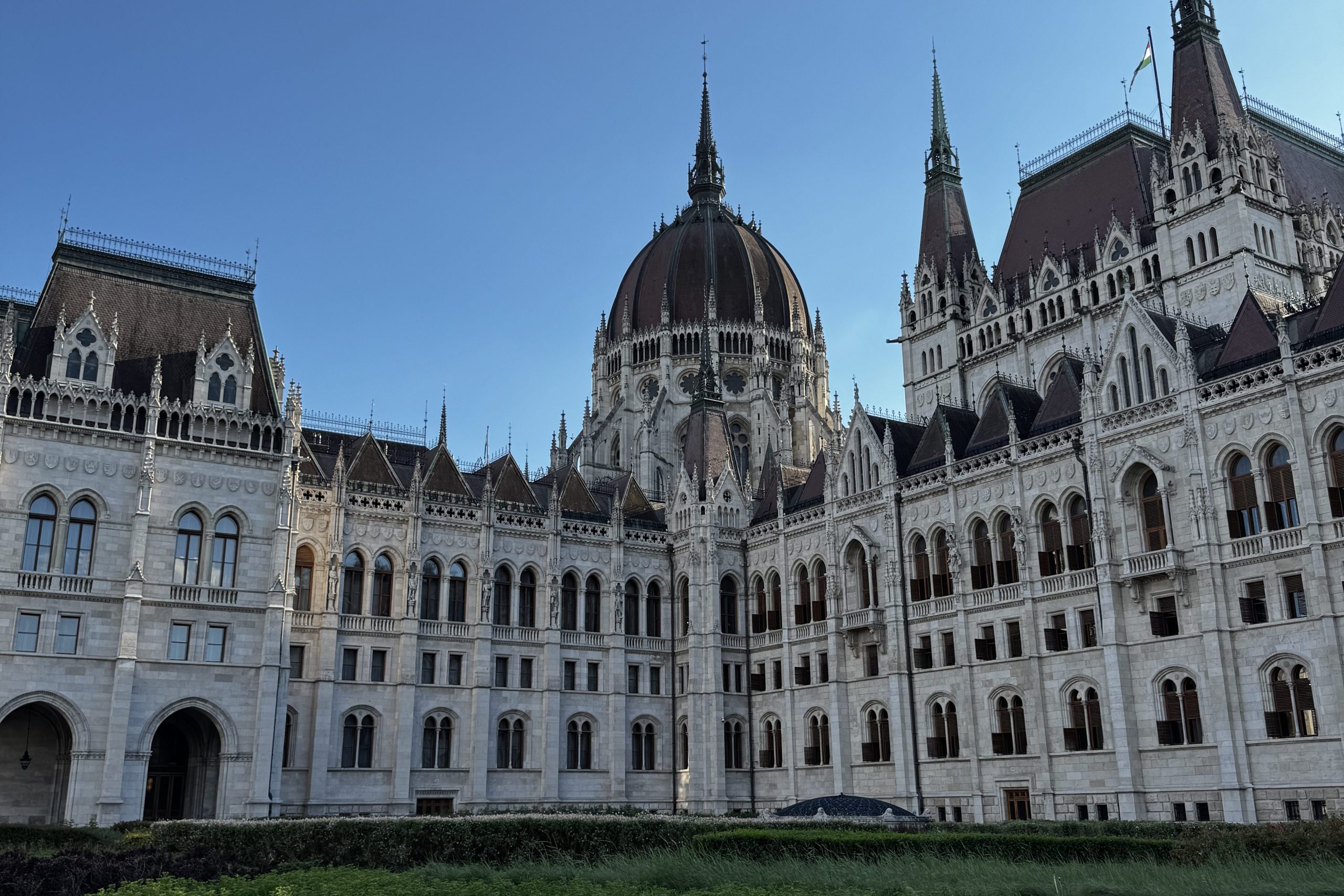
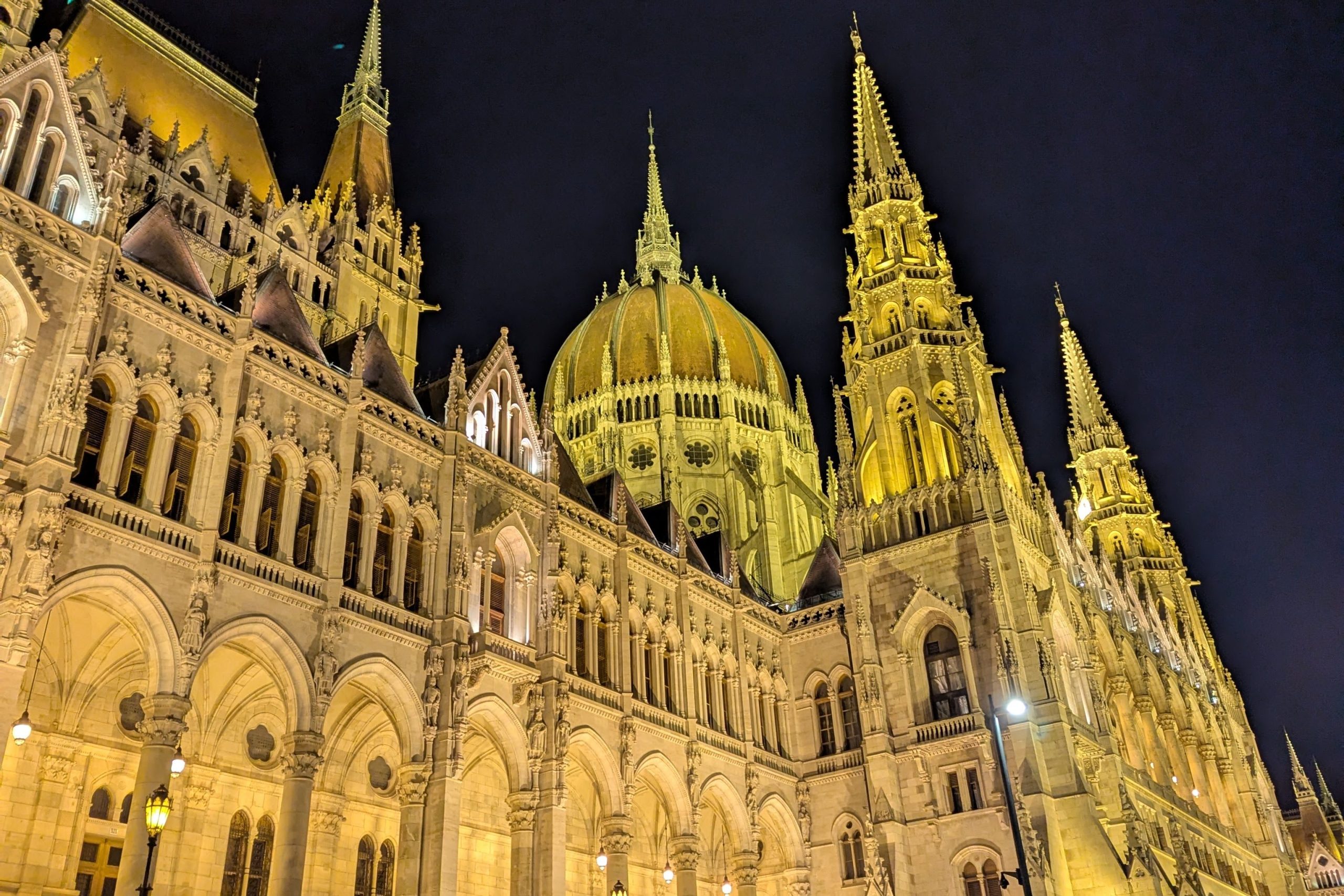
By far the gem of the city. The Neo-Gothic building is one of the most gorgeous structures I’ve ever seen, especially lit up at night. The interior is only accessible through 45-minute tours. Very much up to personal preference if it’s worth it – it’s a gorgeous building, but it depends on how much time you have in the city.
House of Terror
The only museum in Budapest that is a “must-do” in my opinion. While so much of European history feels World War II centric, the House of Terror emphasizes the challenges that Eastern Europe faced after World War II as part of the Soviet Bloc. The museum is located at the exact location of the former secret police headquarters and is a somber experience. Expect to take one – two hours to get through the museum and absolutely get the audio guide.
Margaret Island (Margitsziget)
A one and a half mile island located in the middle of the Danube, is a great way to find some outdoor space in the middle of the city. Consider renting bikes (either traditional bikes or one of the bike carts located on the island) to get around the full island. There’s a collection of small sights throughout (the music fountain, a Japanese garden, some memorials, etc.). It’s a great place to picnic for the afternoon, and walk around exploring.
Other Highlights When Walking Around
- Central Market Hall: Largest and oldest indoor market in Budapest. The first floor is full of vegetable, fruit, meat and cheese vendors. The second floor is full of craft and trinket vendors (a great place to look for a souvenir).
- The second floor of the market is also a great spot to find a lángos stand and grab a snack (or lunch)
- City Park (Hero’s Square / Vadjahunyad Castle): At the end of Andrassy avenue, you’ll find a public park that houses the Szechneyi baths. In that same park you’ll find a big square (Hero’s Square) and Vadjahunyad Castle, both beautiful landmarks.
- They’re not “can’t miss” locations, but if you have the time they’re beautiful and great to tack onto a day at the baths.
- Opera House: Gorgeous architecture instead. If Opera or ballet are your cup of tea, definitely consider attending a performance while you’re in the city.
- Elizabeth Lookout & Chairlift: Probably the most off the beaten path recommendation in this list, but it’s gorgeous if you have the time to get out of the city center.
- There’s an open air chairlift that takes you to the top of János Hill (the highest point in Budapest) where you’ll find the Elizabeth Lookout tower.
- The chairlift is about 20-30 minutes outside of the city. If you’re using Google Maps, search for Zugligeti Libegő (the name of the chairlift). Bus 291, which you can pick up from the Nyugati train station, will get you there.
A Neighborhood Guide to Eating & Drinking in Budapest
Budapest is bursting with a great restaurant and bar scene. This is by no means a comprehensive list of the best spots in the city, just some of my favorites to get you started! No matter what restaurant you end up at, look out for these Hungarian-specific specialties on the menu!
- Food
- Chicken paprikash (paprikás csirke in Hungarian) is a creamy, paprika dish made with small egg dumplings
- Goulash: Hungarian-specific goulash is a meat and vegetables soup, occasionally served with potato dumplings.
- On menus you’ll see it as “Gulyás” with the Hungarian word for the type of meat in front of it
- Lángos: Deep fried yeast dough, classically topped with sour cream and shredded cheese
- More of a street food than a restaurant meal
- Drinks
- Pálinka: Traditional Hungarian fruit brandy
- Drinker beware!!! This is not a fruity drink (it’s closer to sipping vodka straight….) While I feel it’s an important right of passage to try, it took my husband about 30 minutes to recover from the taste of just one sip.
- Tokaji: A rich, sweet Hungarian wine (much more palatable than Pálinka….) from the region of Tokaji!
- Tokaji Aszú is probably the most famous (and the sweetest). It’s a golden wine and feels more like a dessert wine than a traditional wine.
- Tokaji Furmint is my favorite, which is a dry, crisp white wine, while still keeping the flavor of the Tokaji region.
- Bikavér: From the Eger region, this wine (known as “Bull’s Blood) is a deep, rich, red wine (My husband forgave me for the Pálinka after I introduced him to this instead).
- Pálinka: Traditional Hungarian fruit brandy
Restaurant Guide by Neighborhood
| Zerge Coffeeshop | Buda Side / Castle District | -Great coffee and bagels. Small location (just a few tables inside). |
| Poszonyi | Near / North of Parliament | -A local’s recommendation for Hungarian food, and my favorite place to send people. Good portions, good prices, great food! |
| Brios | Near / North of Parliament | Unassuming sit-down brunch option. |
| Szimpla Kert | Jewish Quarter | -The original ruin bar! Lively atmosphere on almost any night of the week. Go earlier in the night if you want to grab a table, or later at night you’ll catch a lively scene, occassionally with some live music. -Szimpla Kert is a can’t miss in Budapest. Even if you’re not a big bar person, check it out earlier in the day. There’s even a farmer’s market in the bar on Sunday mornings / afternoons. |
| Bors Gasztrobar | Jewish Quarter | -Delicious walk-up sandwich spot. While this is on all the restaurant lists of Budapest, I promise you it is not overhyped. I would eat here every day if I could. |
| Cirkusz | Jewish Quarter | -Very popular brunch spot. Expect to wait in a decently long line, but know that the line moves very quickly. -Potentially overhyped (there’s a limit on how good brunch can be for me) but still delicious. |
| Aran Bakery | Jewish Quarter | -Small bakery with pastries and sandwiches -Absolutely not overhyped. Everything I’ve ever tried here blew my mind. |
| Mazel Tov | Jewish Quarter | -Jewish eatery, fancier dinner option. -I’d recommend grabbing a reservation if you want to eat here, as it’s gotten quite popular. The food is delicious, and the decor is eclectic but tasteful. |
| Kőleves Kert | Jewish Quarter | -Outdoor Beer Garden and nice Restaurant -The bar is a casual beer garden, with more limited food options (but a great outdoor space). -The indoor restaurant is more upscale, serving traditional Hungarian food. Both are great options! |
| Karavan | Jewish Quarter | -Outdoor food court, serving both food and beer. -Great option for everyone to try different food, with a casual picnic table atmosphere. -Note: you can’t bring outside food into the eating area here |
| Pasta | South Side of Pest | -Walk up window with ~5 different kinds of pasta on the menu. Will be served to you in a takeout carton. -Simple, delicious, affordable, and one of my favorite places in the city. -Take this (and a convenience store beer) to the steps of the Danube and enjoy a little homemade picnic. |
| Leves | South Side of Pest | -Same owners as Pasta, but with a focus on soup (Leves means soup in Hungarian). They also sell sandwiches. -I ate this every day for lunch, to-go, when living here. I especially love that they serve it in to-go coffee cups. |
| Meron | South Side of Pest | -High-end coffee shop -If you’re a “coffee person” their pour-overs introduced me to more tastes than I thought coffee could ever encompass. -Their breakfast dishes were also phenomenal. |
| Eleszto | South Side of Pest | -Craft beer bar -There’s not a ton of craft beer in the city, and this is the best spot for it. -Very casual outdoor space with large picnic tables. Can almost always guarantee a seat. |
Looking back, I was a little nervous that returning after ten years would never live up to the memories I had built in my head. Instead, Budapest reminded me exactly why I fell in love with travel in the first place. It’s a city where beautiful buildings exist alongside lively restaurants, deep history, relaxing thermal baths, late-night ruin bars, and peaceful walks along the Danube.
Whether it’s your first visit or your fifth, Budapest has a way of making you slow down, look around, and appreciate the beauty and chaos of this world. I hope this guide helps you discover some of the places that made Budapest one of my favorite cities in the world—and if you’re anything like me, you’ll probably find yourself planning your return before you’ve even left.